

Self-care on a budget means resting, recharging and enjoying yourself using what you already own. Most of it costs nothing.
A long shower. An early night. A walk with your phone left at home. An hour where nobody needs anything from you.
Here’s the part that surprised me when I looked it up. Americans already have the time.
The Bureau of Labor Statistics found in its 2025 time-use survey that men spend 5.6 hours a day on leisure and women 4.8, and that 95% of us do something leisurely on an average day.
So the shortage isn’t hours. It’s that we’ve been sold a version of rest that arrives in packaging.
Spending on yourself is fine when the money is there. The trouble starts when a bad week and a checkout page become the same thing, because then rest costs money you needed elsewhere and you feel worse by Friday.
Below are 40 ideas. Most are free, a few cost a couple of dollars, and there’s a table at the end that matches an idea to how you’re actually feeling.
What Self-Care on a Budget Actually Means
It means doing something that helps you rest, move, connect or feel looked after, at a price you won’t regret.
Sometimes that’s $0. Sometimes it’s $2 for a coffee you drink slowly. Once in a while it’s $20 on something you genuinely wanted.
Nobody’s asking you to make every good thing free.
The habit worth breaking is the assumption underneath: that a purchase is what turns an ordinary hour into self-care.
Sleep counts. So does a walk, a phone call, a clean bedroom, and turning down an invitation you were dreading.
Mental Health America’s own guide to looking after yourself runs on the same lines: sleep, food, movement, seeing people, and doing one thing you enjoy each day.
Not a single item on their list has a price attached.
40 Free and Cheap Self-Care Ideas
1. Take a Long Shower
Leave your phone in another room, put music on, and take twice as long as usual.
That’s most of what a spa sells, minus the drive and the $90.
2. Sleep
If you’re running short, this outranks everything else on the list.
The CDC puts adults aged 18 to 60 at seven or more hours a night. Most of us treat that as a target for other people.
Go to bed early. Nap on a Sunday. It’s free, and nothing else on this page works properly without it.
3. Go for a Walk
Getting outside is the cheapest mood change available.
Walk your street, find a park, or take a different route so your brain has something new to look at.
Worth knowing: the CDC’s activity guidance for adults is 150 minutes a week of something moderate, and it names brisk walking specifically. Thirty minutes, five days.
So the walk you take to clear your head is also the whole recommendation. No gym involved.
Cleveland Clinic’s doctors list nine things a brisk daily walk does, and better sleep and lower stress are two of them. Free, and it stacks.
4. Take an Hour Off Your Phone
Notifications, messages, video, email, other people’s opinions. One hour without any of it.
Put the phone in a drawer rather than face-down on the table, because face-down still wins.
Read, stretch, cook, sit outside, stare at nothing.
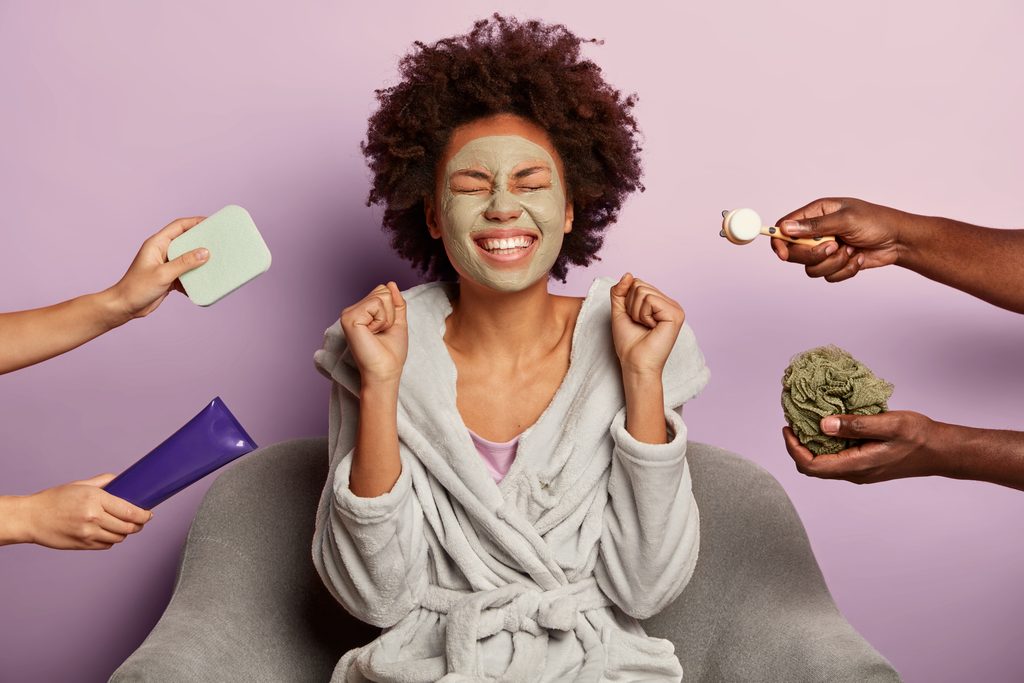
5. Run an At-Home Spa Night
Use the products already in your bathroom. That’s the rule that keeps this free.
- A hot shower or bath
- Whatever skincare you own
- A face mask that’s been in the cabinet since Christmas
- Clean pajamas
- Music, and a drink you like
Turning self-care into a shopping trip is how a free evening becomes $60.
6. Read the Book You Already Bought
You know the one. Bought it in spring, got forty pages in.
Make a drink, sit somewhere comfortable, and give it half an hour.
If you’ve genuinely run out, the library has more than you can read.
7. Watch a Movie at Home
Two movie tickets and popcorn run past $40 now.
Pick something you’ve been meaning to see, make popcorn on the stove, turn the lights down.
Make it Friday’s default and you’ve replaced a recurring expense with a tradition.
8. Make a Drink You Like and Actually Sit Down
Tea, coffee, hot chocolate, iced coffee, a smoothie, lemon water.
Use the cup you like rather than the one nearest the front. Then sit down with it instead of drinking it while doing three other things.
The drink isn’t the point. Ten deliberate minutes is.
9. Put On the Music That Fixes Your Mood
Everyone has a playlist that works. Use it on purpose instead of by accident.
Clean to it, lie on the floor to it, sing badly to it. Changing the atmosphere in a room costs nothing.
10. Have a Dance Party in Your Kitchen
Three songs, full volume, no audience.
If someone does walk in, hand them the phone and let them pick the fourth.
11. Write It Down
Some days you don’t need a purchase. You need the thoughts out of your head and onto paper.
Grab any notebook and write about what’s bothering you, what you’re dreading, what you actually want to change, or what went right this week.
Nobody is reading it. It doesn’t have to be good.
12. List Ten Things You’re Grateful For
When the week has been relentless, deliberately looking for what’s fine can shift the picture.
Small things count, and small things are most of it. A meal you liked. A good conversation. A bed that’s comfortable. A song. Someone who makes you laugh.
Berkeley’s Greater Good Science Center has a readable write-up of the research and it’s refreshingly honest about the timing. The benefit showed up at four weeks and again at twelve, not the same evening.
So don’t judge this one on the first attempt. In the study, most people never even sent the letters they wrote and still felt better.
13. Call Someone Instead of Texting Them
When did you last ring a friend for no reason?
Not a text. Not a reply to their story. A phone call.
Twenty minutes of real conversation does more than two hours of scrolling, and it’s the one item on this list that helps two people at once.
14. See a Friend Without a Restaurant Involved
Dinner out for two is $70 before drinks.
Ask them over. Walk somewhere together. Sit in a park. Cook something. Watch something.
What made the evening good was almost never the bill.
If you want to feed people without the panic, these dinners that cost under $2 a serving handle a full table for less than one takeout order.
15. Take a Picnic Somewhere
Pack what’s already in the fridge, take a blanket, find grass.
Leave the phone in the bag. You’ve built a small day out for the cost of lunch you were eating anyway.
16. Sit Outside Without a Task
Trees, water, open space, a bench. Somewhere that isn’t your living room.
You don’t have to walk it, photograph it, or count the steps. Being outside is allowed to be the whole activity.
17. Watch the Sunset Properly
Find a decent view and actually watch it, rather than photographing it and going back to your phone within nine seconds.
It’s free, it’s different every night, and it’s a useful reminder that the good version of something isn’t always the paid version.
18. Take Yourself Out
Waiting for company is how good afternoons get canceled.
- A free museum
- A neighborhood you’ve never walked
- A bookstore, browsing only
- Lunch at home with a book
- Somewhere you’ve driven past for years
Enjoying your own company is a skill, and it makes the rest of your budget easier.
19. Clear One Small Space
This sounds like a chore. Ten minutes in and it doesn’t.
Pick something tiny: your purse, one drawer, the nightstand, the shelf by the door. Take out what shouldn’t be there and put the rest back properly.
Small order changes how a room feels out of proportion to the effort. And you’ll usually find something you were about to buy again.
If it snowballs into a real session, our weekly cleaning schedule keeps it to twenty minutes a day so it never becomes a lost Saturday.
20. Move the Furniture
New room, no purchase.
Shift the bed. Swap what’s on the walls. Change the sheets. Clear the nightstand. Open the windows.
Your environment usually needs rearranging more than it needs adding to.
21. Do Your Own Nails, Hair and Skin
A salon night at home, using what you own.
Nails, hair wash and condition, skincare, eyebrows, moisturizer, a long shower. Feeling put together doesn’t have to be booked in advance.
22. Wear the Good Outfit on a Normal Tuesday
You don’t need an occasion. Wear it because it makes you stand differently.
The right occasion keeps not arriving. Tuesday is what you’ve got.
23. Log Out of Social Media for a Day
If scrolling reliably leaves you feeling behind, that’s information.
Log out for 24 hours. Deleting the apps is optional and mostly theatrical.
The time that appears is startling. Spend some of it on anything else here.
24. Cook the Meal You’d Have Ordered
Make the thing instead of paying $28 plus delivery for it.
Music on, table set, the good plates, no rush. Restaurant comfort without the restaurant bill.
For the nights that ambition isn’t available, there are 30 dinners that take twenty minutes, and if you want the whole week decided in advance, this $50 weekly meal plan for four is costed line by line.
25. Bake Something
If the ingredients are in the house, bake. Cookies, brownies, bread, muffins.
If they aren’t, skip it. Buying $30 of baking supplies to feel better is the exact loop this page exists to interrupt.
Most of the 20 pantry dinners work on the same principle: use the pantry you’ve already paid for.
26. Do a Workout That Costs Nothing
No membership required. Walking, stretching, dancing, a free video, bodyweight work, a bike, yoga on the floor.
Pick the one you’ll do twice. Enjoyment beats optimal here, every time.
27. Take a Day Off Your To-Do List
Some days nothing needs fixing. You need a break.
Do the essentials and leave the rest where it is. Tomorrow will hold it.
Resting without guilt is a skill, and it’s cheaper than every other coping mechanism on offer.
28. Build a Cozy Evening From What You Own
Candles, throws, matching mugs and new pajamas are not prerequisites.
Dim the lights. Make tea. Change into something soft. Quiet music. Something comforting on the TV.
The mood comes from slowing down. Retail does a convincing impression of it.
29. Use Your Library
Public libraries are the most underused free resource in the country. The federal Public Libraries Survey counts roughly 17,000 outlets across about 9,000 library systems.
Depending on yours, that can mean books, magazines, movies, audiobooks, e-books, wifi, classes, kids’ events and museum passes.
Check what yours lends before you buy entertainment again.
30. Find One Free Local Event
Look up your city’s event calendar this week.
Free concerts, festivals, markets, art openings, outdoor movies, public talks, library workshops.
Most towns run more free things than anyone attends, largely because nobody checks.
31. Start a Hobby With What’s in the House
Watching four videos about a hobby is not a reason to spend $200 on equipment for it.
Draw, write, take photos, garden, cook, sew, learn twenty words of a language.
Be a beginner with cheap materials first. If you’re still at it in two months, then buy the good version.
32. Do Nothing for an Hour
The hardest one here, and the most valuable.
Sit outside. Lie down. Look out of a window. Let your mind wander with nothing playing.
If free stillness appeals but you want structure, the NIH’s plain-English guide to meditation is honest about where the evidence is strong and where it isn’t, which is more than most apps charging $70 a year manage.
33. Say No to Something
The most powerful free item on the list.
You can skip the event. You can decline the favor. You can stop explaining yourself after the first sentence. You can be the one person at the table not spending.
I can’t this time is a complete answer. It protects your week and your account at once.
34. Stop Measuring Your Tuesday Against Someone’s Highlight Reel
Comparison is expensive. It’s also the trigger most people never name.
Their vacation, their kitchen, their car, their apparently effortless life. You are seeing an edit, and you don’t know what it’s financed with.
Unfollow the accounts that reliably leave you feeling behind. That’s not sensitivity, it’s maintenance.
Comparison is one of the 12 emotional spending triggers we’ve written about, and it’s the one that does the most quiet damage to a budget.
35. Write a “Things I Love” List
Twenty-five things that make you happy. Ordinary is the point.
Fresh sheets. A particular song. Rain on a morning you’re not going anywhere. Your best friend’s voice. The good coffee. Barefoot on a warm floor.
Now you own a menu of free things that work on you specifically, written on a good day, for use on a bad one.
36. Make a $0 Treat Jar
Write your free favorites on scraps of paper and put them in a jar.
Walk. Bath. Movie. Call someone. Read. Journal. Nap. Dance. Tea outside.
When you want to treat yourself and don’t want to spend, pull one out. Removing the decision is most of the trick.
37. Run a No-Spend Treat Day
Pick one day and spend $0 on anything non-essential. Not a punishment day. A day where the enjoyment comes from what’s already here.
Cook properly. Watch something. Get outside. Read. Nap. Call someone.
Finding out how much comfort you already own is the point, and it’s the same idea behind the 35 frugal living tips we use, which leave room for the things your family actually cares about.
38. Move $5 to Savings and Count It as the Treat
Strange one. It works on some people and not others.
If security is what you’re short of, moving $10 across does more for your mood than $10 of anything else, because the feeling lasts past the evening.
That’s the case for what actually changes when you become debt free too. The relief is the product.
39. Use the Thing You’ve Been Saving
The good perfume. The nice dress. The expensive tea. The dishes for guests who never come. The notebook too smart to write in.
You already paid for these. Waiting is not making them more valuable.
Today is a good enough occasion, and it costs nothing to decide that.
40. Put Something on the Calendar
Anticipation is free and it lasts longer than the thing itself.
A movie night. A picnic. A walk on Saturday. A friend coming over. A recipe you’ve never tried. A day trip somewhere an hour away.
Having something ahead of you changes this week, not just that day.
How to Treat Yourself on a Bad Day Without Spending
When you’re stressed, flat or exhausted, buying something is the fastest available relief. That’s not a character defect, it’s just what’s nearest.
The problem is when it becomes the only tool you own.
Try a ten-minute pause and one question: what do I actually need right now?
- Tired, so sleep
- Lonely, so call someone
- Overwhelmed, so cancel something
- Bored, so do the thing you keep postponing
- Stressed, so get outside
- Hungry, so eat properly
- Sick of screens, so put the phone away
- Sad, so talk to someone who knows you
- Restless, so move
Nine times out of ten the purchase was standing in for one of those.
Cleveland Clinic’s 20 ways to relieve stress is a useful cross-check on this whole page. Count how many of their twenty cost money. It’s two.
If this is the pattern you keep repeating, working out which feelings set off your own spending does more than any list of alternatives, this one included.
Build Your Own Cheap Self-Care Menu
Decide this before you need it. Nobody makes good choices about rest at 9pm on a bad Wednesday.
| When you feel | Reach for |
|---|---|
| Tired | Nap, or bed an hour early |
| Stressed | Walk, outside, no podcast |
| Lonely | Phone call, not a text |
| Bored | The book you already own |
| Overwhelmed | One hour off your phone |
| Sad | Journal, then call someone |
| Restless | Any movement, badly done |
| Unmotivated | Shower, then one small task |
| Anxious | Somewhere quiet, ten minutes |
| Like shopping | Wait 24 hours, pick a free one |
Keep it in your phone’s notes app.
The value isn’t the list. It’s not having to invent an answer on the day you’re least able to.
Self-Care Doesn’t Have to Be Free Every Time
There’s a real difference between frugal self-care and never spending a dollar on yourself.
If the money is there, enjoy it. A massage, a meal out, a manicure, a new book, a class, a weekend away.
Spending on yourself isn’t the problem. Spending money you don’t have, because you’ve decided buying something is the only route to feeling better, is.
Any budget that leaves no room for enjoyment has a short lifespan. That’s not a moral failing, it’s arithmetic.
How to Budget for Treating Yourself
Don’t cut the small treats. Give them a line.
Make a fun-money category. Say $50 a month, covering coffee, eating out, beauty, entertainment, hobbies, whatever.
When it’s gone, it’s gone. While it’s there, it’s yours and you owe nobody an explanation.
Guilt-free spending is what stops the blowout, and the blowout always costs more than the treats would have.
Setting the number requires knowing what you currently spend, which is what tracking your expenses in seven steps is for. Ten minutes a week, not a nightly ritual.
The 24-Hour Rule for Treat-Yourself Purchases
One rule, and it prevents more overspending than willpower ever has.
If you don’t need it, wait a day.
Add it to a list, close the tab, sleep on it. Then ask:
- Do I still want it?
- Will I use it more than twice?
- Does it fit this month?
- Would I want it at full price?
- Am I buying this, or am I buying a better mood?
Still want it and can afford it? Buy it, guilt-free. Gone off it? You just kept the money and lost nothing.
A Ten-Minute Self-Care Reset
No hour available. Ten minutes.
Minutes 1 and 2. Phone in another room.
Minutes 3 and 4. Drink a glass of water.
Minutes 5 and 6. Stretch, or breathe slowly, whichever feels less silly.
Minutes 7 and 8. Step outside, or at least look out of a window.
Minutes 9 and 10. Answer one question: what’s the one thing I could do today that makes tomorrow easier?
Then go and do that one thing.
This isn’t about escaping what you’re responsible for. It’s about getting enough room to handle it.
A $0 Self-Care Day, Start to Finish
Want to try a whole day? Here’s one that costs nothing.
Morning
- The breakfast you like, made slowly
- Your music on while you do it
- A walk before the day gets its hooks in
Afternoon
- An hour with a book
- A nap, unapologetically
- Call the person you keep meaning to call
Evening
- Cook something properly
- A long shower
- A movie you’ve been saving
- Ten minutes writing before bed
Total: $0. And nothing on that list feels like going without.
Frequently Asked Questions About Self-Care on a Budget
What are some self-care ideas that don’t cost money?
Sleep, a walk, a long shower, reading a book you own, journaling, a phone call, music, time outside, clearing one small space, dancing, and an hour without your phone. All free, all on the list above.
How can I treat myself without spending money?
Use something you already have and make an event of it. Cook the meal you’d have ordered, watch a movie with popcorn from the stove, take a bath, take a nap, or take yourself somewhere new on foot.
How do I practice self-care on a tight budget?
Start with the free options before you look for something to buy, and write your list on a good day so it exists on a bad one. For the things that do cost money, give them a small fun-money category rather than banning them.
Is spending money on self-care bad?
No. It becomes a problem when it’s money you don’t have, or when buying something is your only way of handling a hard day. A budget with room for enjoyment lasts much longer than one without.
What is the cheapest form of self-care?
Sleep, and it isn’t close. The CDC puts adults at seven or more hours a night, and nothing else here works properly on five.
How do I stop impulse buying when I want to treat myself?
Wait 24 hours on anything non-essential. In that time, ask whether you’d still want it at full price and whether you’re buying the item or a better mood. Most of it doesn’t survive the day.
Does self-care have to take a long time?
No. Ten minutes with your phone in another room does more than an hour of half-attention. The ten-minute reset above is built for days with nothing left in them.
Final Thoughts
Looking after yourself shouldn’t leave you worse off on Friday than you were on Monday.
That’s the whole case for the free version. You can rest, see people, make your house feel decent, get outside, and use the things you already own, and still be moving toward what you’re saving for.
None of this is about deprivation. Read the list again and notice how little of it involves going without anything.
Next time the urge to treat yourself shows up, pause before the wallet comes out and ask what would actually help right now.
Often the answer is sleep, or a walk, or twenty minutes on the phone to someone who knows you. None of which are for sale.