
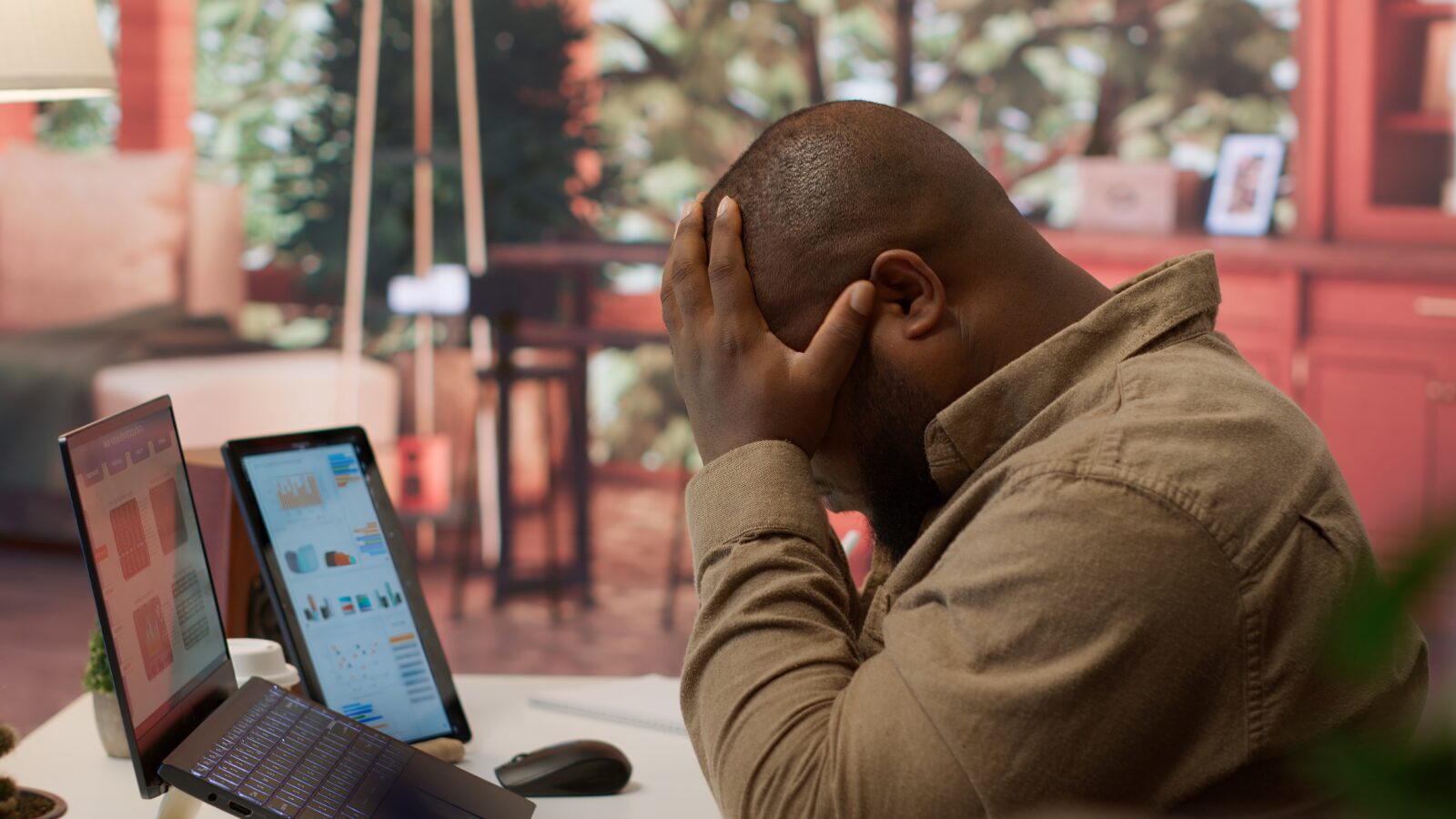
Emotional spending is buying something you didn’t need because of how you felt. Recognize it?
Maybe you ordered takeout after an exhausting shift.
Maybe you opened a shopping app because you were bored, and somehow ended up placing an order.
Maybe you bought something for your kids because you felt guilty about saying no.
Or you saw a huge sale, felt that familiar flicker of panic, and told yourself that buying it was actually saving money.
Then the excitement wore off.
You checked your balance, and that little voice showed up: “Why did I buy that?”
If any of that lands, you’re in normal company, and it has very little to do with discipline.
We treat overspending as a math problem. Make a budget, spend less than you earn.
Money runs on feelings as much as arithmetic.
Half the time the product is beside the point. What you’re buying is comfort, relief, or the small hit that comes with clicking checkout.
A budget tells you where your money should go. Your triggers explain why it keeps going somewhere else.
So this guide skips “just stop shopping.” You get 12 triggers, a spending journal, seven questions, and a 7-day reset.
What Is Emotional Spending?
Emotional spending is when feelings drive a purchase more than your needs or your goals.
It shows up when you’re stressed, sad, lonely, bored, excited, anxious, guilty, angry or under social pressure.
Here’s the part most people get wrong: it doesn’t have to be an impulse buy.
Picture an exhausting week where you decide Saturday is your treat day. You set aside $100 on purpose. The spending is planned, and the reason behind it is still emotional.
Nothing wrong with treating yourself.
The trouble starts when spending becomes your main tool for handling how you feel.
Emotional Spending vs Impulse Spending
These get used interchangeably.
They’re not the same thing.
Impulse spending is about how you buy: fast, unplanned, barely considered.
Emotional spending is about why you buy: a feeling is steering the decision.
You can have an impulse buy with no emotion behind it, and emotional spending that was planned weeks ahead.
The distinction matters because “stop impulse buying” is useless advice if the real driver is stress, loneliness, boredom or guilt.
12 Emotional Spending Triggers to Watch For
1. You Spend When You’re Stressed
Stress is the easiest one to spot, once you know to look for it.
Terrible day. Exhausted. Don’t want to cook, don’t want to think. So you order dinner.
Then you browse. Then you see something you like.
The purchase buys you twenty minutes of relief.
That’s exactly why it’s so hard to stop.
You’re not buying the product. You’re buying a short escape from how you feel.
What to do instead. Build a list of cheap ways to decompress and keep it somewhere you’ll see it:
- Take a shower
- Go for a walk
- Watch one episode of something
- Put music on
- Call someone
- Nap
- Make coffee at home
- Write it down
- Move your body for ten minutes
The point isn’t to ban yourself from spending. It’s to have another route to feeling better.
If the stress-to-takeout pipeline is your pattern, keeping 30 dinners that take twenty minutes in the house beats willpower.
So does a shelf of things you can cook from the pantry for the nights you haven’t shopped.
2. You Shop When You’re Bored
Boredom makes shopping weirdly appealing.
Scrolling gives your brain a job. Finding something creates anticipation.
Adding to cart is a small thrill, and buying it pays out.
The boredom passes. The charge doesn’t.
Try this. Make a boredom list. Ten things you can do that cost nothing. Stick it where you’ll actually see it, and pick one before you open an app.
Half the time you’ll find you didn’t want the thing. You wanted something to do.
Cooking counts, by the way. So does clearing one drawer that annoys you, which costs nothing and gives you the same small hit of having done something.
3. You Spend When You’re Sad
Sadness sends us looking for comfort. For some people that’s food. For others it’s a package arriving.
Buying something creates a flicker of anticipation when you’re flat.
Then the feeling fades and the purchase is still there, sometimes with regret attached.
Ask yourself one question: am I buying this because I want it, or because I want to feel different?
That question alone creates enough of a gap to break the habit.
You don’t need to feel ashamed of wanting comfort. You need comfort that doesn’t route through a checkout.
4. You Shop Because You Feel Lonely
Online shopping does a convincing impression of connection.
You’re browsing, reading reviews, watching videos, joining in with whatever everyone else is buying.
For a few minutes you feel part of something.
Then the box arrives and you’re still lonely.
If this is your trigger, go at the loneliness directly. Call someone. Join something. Turn up to the thing you keep not going to. Ten minutes of actual conversation beats another order.
5. You Spend Because You Feel Guilty
Guilt hits hardest when children are involved.
Maybe work has eaten your week.
Maybe you’ve said no to four things in a row, or couldn’t afford the thing they really wanted.
Then you see something they’d love, and you think: I’ll just get this.
The purchase feels like making up for something.
Buying things isn’t the only way to show up for people. Sometimes your kids want your attention more than another toy, and sometimes you need to let yourself off the hook instead of paying a fine.
6. You Spend to Reward Yourself
Rewards are fine.
Building them into your budget makes money goals easier to stick to.
The problem starts when everything hard becomes a reason to spend.
Finished a project, buy something. Rough meeting, buy something. Went to the gym, buy something. Got paid, buy something. Survived Monday, buy something.
Spending quietly becomes your only reward system.
Build some free ones. A film at home, your favorite dinner cooked properly, an hour to yourself, a long bath, a walk somewhere good, the library, a hobby you’ve abandoned.
Rewards don’t need receipts.
7. You’re Afraid of Missing Out
FOMO is behind more unnecessary purchases than almost anything else.
Only 3 left. Sale ends tonight. Limited edition. Everyone’s buying this.
Suddenly waiting feels risky.
Here’s the thing worth memorising: a discount isn’t a saving if you weren’t going to buy it. Something costs $50, you didn’t need it, and paying $40 doesn’t save you $10. It spends $40.
Use the 48-hour rule. When a non-essential purchase feels urgent, write down the item, the price and why you want it. Then come back in two days.
Still want it and it fits the budget? Reconsider it properly. Gone off it? You’ve just kept the money.
8. You Spend to Keep Up
Comparison does real damage to a budget.
Someone’s got a new phone. A friend’s on vacation.
Your neighbor’s replaced the car, and someone posts a kitchen that looks like a showroom.
Suddenly your perfectly fine things feel shabby, and you start spending to close a gap that might not exist.
You almost never see the whole picture. You don’t know their income, their debt, whether it’s financed, or what’s happening off camera.
Don’t let a highlight reel set your budget.
9. You Spend When You’re Excited
Not all of this comes from bad feelings. Excitement spends money too.
Unexpected cash arrives. A raise, a bonus, a refund, a good day. You start planning what to do with it before it clears.
That’s lifestyle inflation getting its foot in the door.
Decide the rule before the money shows up. Something like half to goals, 30% to planned spending, 20% for fun. The exact split doesn’t matter. Deciding in advance does.
10. You Spend When You’re Angry
Anger produces the “I don’t care any more” purchase.
You’ve been careful all month. You’ve stuck to the plan.
Then something happens and you think: forget it, I’m buying it.
One purchase becomes three, and you feel worse afterwards than you did before.
Give anger a cooling-off period. No unnecessary money decisions while you’re furious. Sleep on anything big.
You can always buy it later. You can’t always undo spending money that was needed elsewhere.
11. You Avoid Your Finances Because They Make You Anxious
This one doesn’t look like spending at all.
You don’t open the banking app. You don’t check the card.
You don’t look at the debt or add up the month.
Avoiding it feels like relief, and the problem grows in the dark. Bills get missed. Spending carries on unchecked.
The American Psychological Association has a piece on moving beyond financial denial that covers why the avoiding feels so reasonable at the time.
Shrink the check-in. You don’t need three hours with a spreadsheet. Ten minutes:
- Current balance
- Bills coming up
- Recent spending
- Savings progress
Then stop. The aim is to make looking at your money boring instead of frightening.
The CFPB’s spending tracker worksheet is free and it’s about as unintimidating as these get.
12. You Restrict Yourself So Hard That You Blow Out
Easy one to miss, because it looks like the opposite problem.
Sometimes you’re not too loose with money. You’re too tight.
You build a brutal budget. No eating out, no entertainment, no clothes, no hobbies, nothing.
You hold it for three weeks on willpower alone.
Then you crack, and the blowout costs more than the fun would have.
A budget with no joy in it is a budget with a short lifespan.
Give yourself guilt-free money. A set amount each month you can spend without justifying it. When it’s gone, it’s gone. While it’s there, it’s yours.
A bit of slack makes the rest of the plan survivable. It’s the same principle behind the 35 frugal living tips we use, which deliberately leaves room for the things your family actually cares about.
The Emotional Spending Cycle
It usually runs in a loop:
Emotion → trigger → spending → relief → regret → money stress → more emotion
In practice that looks like: stressful day, “I deserve something”, online shopping, twenty minutes of excitement, buyer’s remorse, “I can’t believe I spent that”, money stress, more stress, more spending.
Cutting out the purchase at the end doesn’t work, because by then the loop has already run.
You have to break in earlier, at the trigger.
How to Stop Emotional Spending
Step 1: Find Your Triggers
Pull up your recent unnecessary purchases. For each one write down:
- What you bought
- When you bought it
- What it cost
- What you were feeling just before
Patterns show up fast. Maybe most of it happens after work. Maybe it’s boredom. Maybe payday. Maybe social events.
Your pattern is yours, which is exactly why generic advice bounces off.
Step 2: Track the Feeling, Not Just the Number
A spending journal with an emotion column is worth ten budgeting apps.
| Purchase | Amount | Emotion | Trigger | Needed it? |
|---|---|---|---|---|
| Takeout | $25 | Stressed | Long workday | No |
| Clothes | $60 | Excited | Sale email | No |
| Groceries | $80 | Neutral | Planned shop | Yes |
| Toy for the kids | $18 | Guilty | Said no all week | No |
| Coffee out | $6 | Bored | Waiting around | No |
After two or three weeks the pattern is obvious.
You might find your problem was never “shopping”. It was stress. Or boredom. Or social pressure. That’s a far more useful thing to know.
Treat the journal as curiosity rather than a punishment. You’re gathering evidence, not building a case against yourself.
Step 3: Put a Gap Between the Feeling and the Purchase
Don’t tell yourself I can never buy this. Tell yourself I can buy this later.
That small swap makes the whole thing feel less like a punishment, and it works far better.
- 24 hours for small purchases
- 48 hours for medium ones
- 7 days for anything expensive
While you’re waiting, ask: do I still want it, does it fit the budget, would I buy it at full price, and am I trying to change how I feel?
Step 4: Remove the Easy Triggers
Make emotional spending slightly annoying to do:
- Delete the shopping apps
- Unsubscribe from promotional emails
- Turn off shopping notifications
- Remove saved card details
- Unfollow the accounts that exist to sell you things
- Leave things in the cart overnight
You need far less willpower when there’s friction in the way. Every extra step is another chance for the feeling to pass.
Step 5: Build a Feel-Better List That Costs Nothing
Write down 10 to 20 things that improve your mood for free or nearly free.
Call a friend. Walk. Exercise. Read. Cook something good. Music. Nap. Favorite film. Reorganise one drawer. Sit outside. Write it down. Long shower.
When you’re triggered, take one off the list before you open an app.
Cooking is on mine, which is why 50 costed family dinners gets used more often than any budgeting tool.
Step 6: Build a Budget That Matches Your Actual Life
If your budget assumes you’ll never want anything, it won’t survive contact with a bad week.
Give yourself real categories: a fun fund, a restaurant budget, clothes, hobbies, a vacation fund, personal spending.
Once enjoying yourself is planned for, it stops feeling like failure.
That’s the whole idea behind this $50 weekly meal plan as well. It’s built around what a household actually eats rather than the cheapest theoretical week, because the cheapest theoretical week never happens twice.
The Seven-Question Emotional Spending Test
Before any non-essential purchase:
- Do I actually need this? If no, keep going.
- Did I plan for it? If no, pause.
- What am I feeling right now? Name it.
- Am I trying to change that feeling? If yes, that’s your answer.
- Would I still want this tomorrow? Unsure means wait.
- Does it fit what I’m working toward? Affordable and unhelpful are different things.
- What happens if I don’t buy it? If the answer is nothing, there’s your answer.
What to Do After You Slip
You will slip. Everyone does.
The expensive mistake isn’t the purchase. It’s turning one purchase into permission for a whole week of them.
Don’t go with I’ve already ruined this month. Go with that happened, what can I learn from it.
Ask what triggered it, what you were feeling, what you told yourself beforehand, whether you could have delayed it, and what you’d do differently.
Then carry on. One purchase doesn’t decide anything.
Your 7-Day Emotional Spending Reset
One small task a day.
Day 1. Look at your last 30 days of transactions and pick out five purchases that weren’t necessary. No judgment, you’re gathering data.
Day 2. Write down what you were feeling before each of the five. Stress? Boredom? Loneliness? Excitement? Guilt? FOMO?
Day 3. Delete the shopping apps, unsubscribe from the promo emails, turn off the notifications.
Day 4. Write your feel-better list. Ten things, free or nearly free.
Day 5. Commit to a 24-hour wait on anything non-essential. Longer for anything big.
Day 6. Set your guilt-free spending amount for the month. This is part of the plan, not a failure of it.
Day 7. Review. When are you most likely to overspend, which emotion drives it, and what works instead?
At the end you’ve got something better than a list of banned purchases. You’ve got a system.
Frequently Asked Questions About Emotional Spending
What is emotional spending?
Emotional spending is buying something mainly in response to a feeling rather than a real need or a deliberate decision. Stress, boredom, sadness, loneliness, excitement, guilt, anxiety and social pressure are the usual drivers.
Is emotional spending the same as impulse buying?
No. Impulse buying describes an unplanned purchase. Emotional spending describes a purchase driven by feeling. They overlap often, but a completely planned shopping trip can still be emotional spending.
How do I know if I’m an emotional spender?
Look at your recent purchases and note what you were feeling just before each one. If the unnecessary ones cluster around stress, boredom, loneliness or anger, you’ve found a pattern.
How do I stop spending money when I’m stressed?
Name the pattern first, then build alternatives that don’t involve a checkout. Walking, exercise, a conversation, music, a break. Add a waiting period so a temporary mood can’t become a permanent charge.
Why do I spend money when I’m bored?
Shopping gives your brain stimulation, anticipation and a reward, all in about ninety seconds. If boredom is your trigger, keep a list of free things to do and reach for that before the app.
How can I stop emotional spending without feeling deprived?
Don’t cut every enjoyable purchase. Build a realistic fun category into your budget instead. Intentional beats restrictive, because restrictive collapses.
How can I control impulse purchases?
Use a waiting period, delete saved card details, unsubscribe from marketing, remove the apps, and ask whether you’d still want it in 48 hours.
Should I feel guilty after overspending?
Guilt on its own changes nothing.
Work out what triggered it and adjust the system. One mistake doesn’t have to become a pattern.
Can emotional spending affect my savings?
Yes. Repeated emotional purchases eat the money that would have gone to savings, and if it becomes frequent it can build debt that makes everything else harder.
What’s the first step to overcoming emotional spending?
Track your spending and your emotions together. What you bought, what it cost, how you felt beforehand, what set it off. Once you can see the pattern you can start swapping the response.
When should I get help with this?
If spending is causing real financial harm, building debt you can’t manage, creating serious distress, or feels genuinely out of your control despite repeated attempts, talk to a qualified financial professional or a mental health professional. Emotional spending is sometimes connected to something that budgeting alone won’t reach.
Final Thoughts
Emotional spending doesn’t mean you’re irresponsible with money. It means you’re a person.
Money and feelings are wired together, which is why knowing how to build a budget often isn’t enough on its own to change what you actually do. Money has topped the APA’s list of American stressors since the survey began, and their money and psychology hub is a better starting point than most finance advice.
If you spend when you’re stressed, bored, lonely, excited, guilty, angry or scared of missing out, more discipline is the wrong prescription.
Get curious instead. What were you feeling, what set it off, what did you hope the purchase would fix, and what could you do instead?
The better you know your pattern, the easier it gets to interrupt.
The goal was never to strip the emotion out of money decisions. It’s to stop your emotions making every single one of them.
If you want somewhere practical to start, the 20 changes that bring a grocery bill down are the ones with the fastest payback, and a 15-minute weekly meal plan removes the 6pm decision that ends in takeout more often than anything else.