

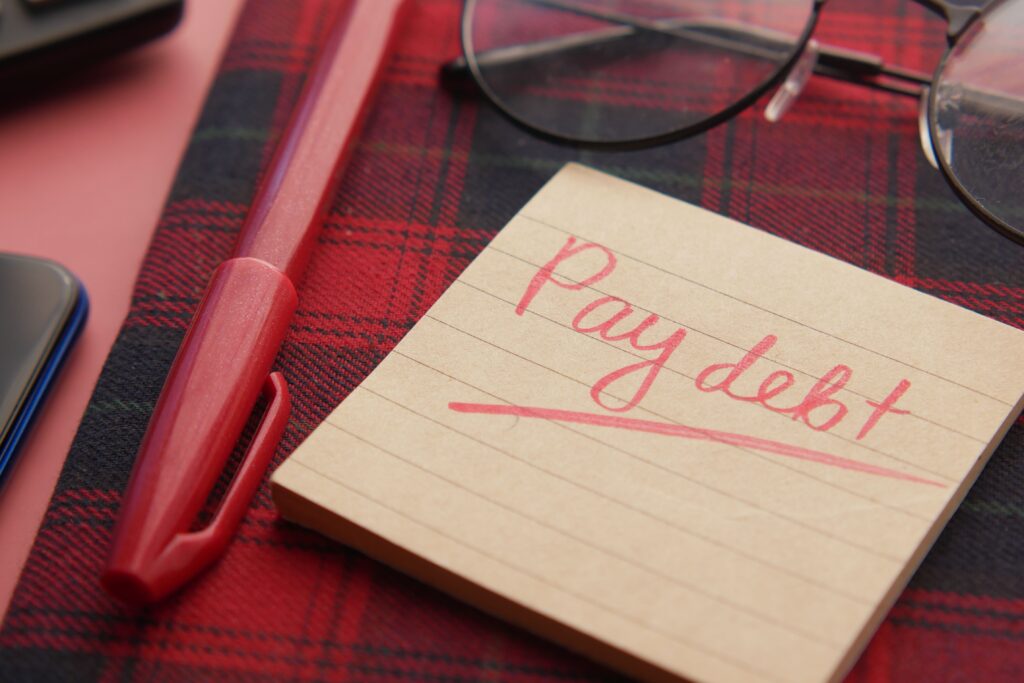
The benefits of being debt free come down to one thing: the money you were sending to lenders becomes yours to point somewhere else.
More cash every month. No interest leaking out. An emergency fund that finally moves.
Payday stops being the day your income gets divided up by people you owe.
Then there’s the part nobody puts in a headline, which is what it costs to stay where you are.
Americans carried $1.26 trillion on credit cards in the second quarter of 2026, according to the New York Fed. The average rate on accounts that get charged interest was 22.15% in June 2026.
Run that through a real balance. At 22.15%, a $2,500 card with a $75 minimum payment takes 53 months to clear and costs $1,417 in interest.
Pay $225 instead and it’s 13 months and $324.
Same debt. Same rate. A difference of $1,093 and three and a half years.
That gap is what this is really about. Below are the 15 things that change when the payments stop, plus the part most people skip: deciding where that money goes before it lands.
What Does It Mean to Be Debt Free?
Being debt free means you’ve cleared your balances and have no required debt payments left.
Depending on your situation, that could cover credit cards, personal loans, a car loan, student loans, buy-now-pay-later balances, medical debt, payday loans, or money you borrowed for a business.
Some people use the phrase to mean zero debt of any kind, mortgage included. Others mean no consumer debt, with a mortgage still in place.
Neither definition is more correct. Pick the one that matches what you’re working toward.
For most households, clearing expensive consumer debt is the milestone that changes the month-to-month picture. A 22% card and a 3% mortgage are not the same problem, and treating them the same way costs you money.
15 Benefits of Being Debt Free
1. You Have More Money Every Month
Paying off a $300 monthly loan doesn’t mean you’ve earned an extra $300. It means you now have $300 more in your monthly budget that can be used for savings, investing, other expenses, or whatever matters most to you.
That money is now available to put toward the goals and priorities that matter most to you.
Stack a few of them and the number gets serious:
| Debt | Monthly payment |
|---|---|
| Credit card | $150 |
| Car loan | $350 |
| Personal loan | $250 |
| Total freed | $750 |
Three payments gone is $750 a month. Over a year that’s $9,000.
Here’s the catch, and it’s the one I’d flag before any of the others: freed cash flow disappears if you never decide where it goes. Most of it gets absorbed by ordinary life within months.
Do you know what your own number is? If not, that’s a tracking problem, and this 7-step method for tracking your expenses will show you inside two weeks.
2. You Stop Paying Interest You Can’t See
A debt payment does two jobs. Part of it reduces what you owe. Part of it rents the money.
The rented part is invisible on a bank statement, and it’s where the damage is.
Look again at that $2,500 card at 22.15%. The first month’s interest is $46. Send a $75 minimum and $29 touches the balance.
So what did that payment actually buy? You paid $75 and moved $29.
The CFPB’s guide to reducing debt puts the highest-rate balance first for exactly this reason. Expensive debt takes the biggest cut before your payment does any work.
3. You Get Options Instead of Obligations
Financial freedom means options. That’s the whole of it.
When your income isn’t spoken for, you can change jobs, drop to four days, start something on the side, or take three months off between roles.
None of that requires a big salary. It requires low fixed costs.
Debt turns decisions into obligations. Clearing it turns them back into decisions.
4. Money Stops Following You Around
Money worry doesn’t stay in your bank account. It shows up at work, in the car, at 2am.
How am I making this payment. What if my hours get cut. What happens if the car goes.
Fewer payments means fewer of those questions.
The CFPB defines financial well-being as having security and freedom of choice, now and later. Income barely features in it.
Which is the useful bit: you don’t have to out-earn the stress. Sometimes you just owe less.
5. Your Emergency Fund Finally Moves
Saving while you’re in debt is hard because there’s nothing left to save with.
Before, the order runs: income, bills, debt payments, whatever survives.
After, it runs: income, bills, savings, goals.
Same income. Different sequence.
And you need the savings, because becoming debt free doesn’t stop the transmission going, the roof leaking, or a kid needing $400 of something on a Tuesday.
A debt-free household with no cash buffer is one bad week from a new balance.
The Fed’s 2025 household survey put 63% of adults able to cover a $400 surprise with cash, and 55% holding three months of expenses.
So nearly half of households have no cushion, debt or no debt. Clearing balances without building one just changes which problem you have.
The CFPB’s emergency fund guide is blunt about the fix, which is that consistency beats size at the start.
If the money has to come out of the grocery line, the 35 frugal living tips we use are sorted by what they actually return.
6. A Bad Month Stops Being a Crisis
Lose part of your income with four payments due and you still owe four payments. Nothing about the obligation cares what happened to you.
Now how much do you actually need to bring in with those payments gone? Much less, and that’s the whole benefit.
That’s the difference between a rough month and a spiral.
Security isn’t only about what you earn. It’s about how much of it is already committed before the month starts.
7. Retirement Saving Becomes Possible Again
Once the payments stop, $500 a month can go somewhere it compounds.
The window right after your last payment matters more than people expect, because that’s when the money is loose and undecided.
Don’t let the old debt payment quietly become your new standard of living.
You were already living without it. Keep living without it and give it a different job.
8. Every Other Goal Gets Closer
Debt competes with everything. A down payment, a business, a college fund, a newer car, six months of expenses in the bank.
Each of those was waiting behind the same monthly payment.
Take the payment away and they stop being someday items.
This is where paying off debt turns into something more than a number going down. It funds the version of your life you actually wanted.
9. There’s Less to Keep Track Of
Small benefit, big daily effect.
Four cards, two loans, a financing account and three buy-now-pay-later plans means eight due dates and eight chances to miss one.
Fewer accounts means fewer late fees, fewer logins and fewer things to remember on a week when you’re already behind.
Being debt free won’t fix your money. It makes your money much easier to run.
10. You Can Afford to Leave a Job
This is the benefit people undervalue most.
Picture being genuinely unhappy at work with $900 a month in payments. Leaving isn’t a decision, it’s a risk you can’t take. You need that specific paycheck.
Drop the payments and the same choice looks different. You could take less money for better hours, retrain, go out on your own, or work fewer days.
Career flexibility doesn’t come from being rich. It comes from cheap months.
11. You Stop Needing the Next Paycheck
Living paycheck to paycheck isn’t only about income. Plenty of high earners do it, because most of what they make is already committed.
Being debt free lowers the number you absolutely have to bring in.
That makes the same salary feel like more.
The question shifts from how do I get through this month to what do I want this money to do. That’s a different relationship with your own paycheck.
12. You End Up Better With Money Than When You Started
Paying off debt forces you to learn things.
Where the money goes. What you actually need. Which purchases you regret. What sets off a spending run.
Those lessons don’t leave when the balance hits zero.
The real win isn’t I paid off my debt. It’s I know how my own spending works now.
If the spending runs are the part you can’t crack, the 12 emotional spending triggers are worth reading before you build the payoff plan, because a plan that ignores your triggers gets abandoned in week three.
13. You Trust Your Own Decisions More
Every balance you clear is evidence that you can set a target and hit it.
That changes what you believe about yourself, and belief drives behavior.
I’m terrible with money becomes I made a plan and stuck to it.
That confidence carries into saving, investing and the next hard money decision you have to make.
14. You Can Spend on What You Actually Care About
Being debt free doesn’t mean living small. It’s the opposite.
With the obligations handled, you can put real money into the things that matter to you and not feel it as a mistake.
Family trips. A hobby you dropped. Giving. Fixing the thing in the house that annoys you every day.
Frugal living means your spending matches your priorities. It’s far easier when interest isn’t taking a cut first.
That’s the logic behind 50 costed family dinners too. Get the routine spending down and the money that’s left can go somewhere you’ll remember.
15. You Build Instead of Paying for the Past
This is the long-run one.
A debt payment is today’s income paying for something you already bought and possibly already used up.
Clear it and today’s income starts buying your future instead. Savings, retirement, property, a business, a buffer.
You stop catching up and start building forward.
The Biggest Benefit of Being Debt Free Is Choice
If all 15 collapsed into one word, it would be choice.
Debt limits choices because part of next year’s income is already promised. Clearing it hands that income back.
You choose whether it goes to savings, investing, a trip, a career change, a business, fewer hours, or a bit more breathing room at the end of the month.
That’s what financial freedom is. Not millions in an account. Enough control that what you owe doesn’t decide what you do.
Is Being Completely Debt Free Always the Best Goal?
No. Does that sound like heresy on a money site? This is where the popular advice gets sloppy.
Zero debt is a great outcome. It isn’t automatically the best use of every dollar you have.
Some debt behaves differently:
- A low-rate mortgage
- Student loans on an income-driven plan
- A business loan producing more than it costs
- Anything with a prepayment penalty
Throwing everything at a 4% loan while carrying no cash is a real risk, not a virtue. One unexpected bill and you’re back on a 22% card, further behind than when you started.
The better question isn’t how fast you can get to zero. It’s which mix of payoff, savings and investing puts you in the strongest position twelve months from now.
Should You Pay Off Debt or Save Money First?
For most people it’s both, in a specific order.
Step 1: Cover the essentials
Housing, food, utilities, transport, insurance. These come first and they aren’t negotiable.
Step 2: Build a small starter fund
A few hundred dollars is enough to stop a flat tire becoming a new balance. That’s the entire purpose of it.
Step 3: Attack the expensive debt
Highest rate first. At 22% versus 7%, this isn’t close.
Step 4: Keep the savings growing
As payments fall away, move some of the freed money into the buffer rather than all of it into the next balance.
Step 5: Redirect the old payment on purpose
The month a debt clears, that payment gets reassigned automatically. Same day, same amount, new destination.
The trap is paying off debt and replacing it within the year. Skipping steps 2 and 4 is usually how that happens.
How to Become Debt Free Faster
No system needed. Six things, in order.
Write Down Every Debt
One list, four columns:
| Debt | Balance | Rate | Interest per month |
|---|---|---|---|
| Credit card | $2,500 | 22.15% | $46.15 |
| Personal loan | $5,000 | 12% | $50.00 |
| Car loan | $8,000 | 7% | $46.67 |
Look at that last column, because it’s the one nobody calculates.
The $2,500 card costs almost exactly the same each month as the $8,000 car loan. Balance size told you nothing. The rate told you everything.
You can’t build a payoff plan around a number you’ve never written down, and most people have never written this one down.
If the columns are the problem, the 7-step expense tracking method covers where to find the statements and what to record.
Stop Adding New Debt
Hardest step on the list.
You can’t pay off a card you’re still using. The balance moves sideways and you feel like you’re failing at something you never actually started.
Put the card in a drawer. Remove it from your phone and from the checkout pages that have it saved.
Choose a Payoff Method
Two approaches, both recognized by the CFPB.
Debt avalanche. Minimums everywhere, extra money at the highest rate. Costs the least in interest.
Debt snowball. Minimums everywhere, extra money at the smallest balance. Gives you a cleared account sooner, which keeps people going.
The avalanche wins on paper. The snowball wins if the avalanche is why you quit in month four.
Neither one is a religion. Which one will you still be running in March?
That’s the only question that decides it.
Find the Extra Money
Look at your spending and ask where you can create margin for six months. Not forever. Six months.
Cancel the subscriptions you forgot about. Sell what you don’t use. Take on extra hours if they’re available. Cut the grocery bill, which is where most households have the most room.
The 20 changes that bring a grocery bill down are ranked by payback, and a 15-minute weekly meal plan kills the 6pm takeout decision, which for most families is the single most expensive habit in the house.
If you want the number to beat, this $50 weekly meal plan for four is costed line by line, and 30 dinners that take twenty minutes exist for the nights willpower isn’t going to show up.
You don’t have to live miserably. You have to create enough room to make the extra payment for two seasons.
Use Windfalls on Purpose
A bonus, a tax refund, a gift, a good month of side work. Unexpected money shortens a payoff timeline faster than anything you can cut.
You don’t have to send all of it. Decide the split before it arrives, because deciding after it arrives never goes the same way.
Celebrate Without Spending
$500 paid off is progress. So is your first cleared card.
Don’t save the acknowledgment for the finish line, which might be two years out. That’s a long time to feel like nothing is happening.
So what counts as a reward that doesn’t set you back? A meal you like, cooked properly. A day with nothing scheduled.
What to Do After You Become Debt Free
This is where it goes wrong for a lot of people.
The last payment clears, the money shows up in checking, and by month three it’s gone into nothing in particular.
So write the plan before the debt ends. Say the old payment was $800:
- $400 to the emergency fund
- $200 to retirement
- $100 to short-term savings
- $100 to whatever you want, no justification required
The exact split isn’t the point. Deciding in advance is.
Give the old payment a new job before it becomes available, or your standard of living will take it without asking.
Your 30-Day Debt Freedom Reset
Four weeks, one focus each.
Week 1: know your numbers.
- List every debt
- Write down each balance and rate
- Note the minimum payments
- Total it up, however unpleasant that is
Week 2: find the money.
- Track a full week of spending
- Cancel the subscriptions you don’t use
- Read your recurring charges line by line
- Pick two categories to cut for six months
- Check whether extra income is available to you
Week 3: build the plan.
- Choose avalanche or snowball
- Set the extra payment amount
- Name your first target debt
- Automate the minimums
- Schedule the extra payment for the day after payday
Week 4: change the habits.
- Remove saved cards from checkout pages
- Set your monthly guilt-free amount
- Start the starter emergency fund
- Write down where the old payment goes when it’s free
Thirty days won’t make you debt free. It makes you organized, which is the part most people never get to.
What Being Debt Free Does Not Mean
It doesn’t mean you’ll never have another money problem, or never borrow again.
It doesn’t mean living on the cheapest version of everything, or giving up anything you enjoy.
And it doesn’t make you wealthy on its own.
Being debt free is a foundation. What you build on it is the actual result.
Frequently Asked Questions About Being Debt Free
Is being debt free worth it?
For most people, yes. Clearing expensive debt cuts your interest costs, improves cash flow immediately, and gives you more say over your own income.
Whether it’s worth clearing every type of debt as fast as possible depends on the rates, your savings and what else you’re trying to do.
What is the biggest benefit of being debt free?
Choice. Once required payments stop, more of your income becomes available for savings, investing, emergencies and everything else you’ve been postponing.
Does being debt free mean having no mortgage?
Not necessarily. Some people count a mortgage, others don’t. Pick the definition that fits your goals and stop worrying about whose version it matches.
Can being debt free make you happier?
It removes a specific, recurring source of pressure and gives you more control over your money. The CFPB frames financial well-being around security and freedom of choice rather than income, which is closer to how it feels in practice.
Should I save money while paying off debt?
Usually yes. A small buffer stops an unexpected bill from putting you straight back on a card. How you split it depends on your rates and how stable your income is.
Is the debt snowball or debt avalanche better?
The avalanche costs less in interest. The snowball clears an account sooner, which keeps more people going.
The best method is the one you’ll still be following in six months.
How long does it take to become debt free?
There’s no standard answer. It depends on your balances, your rates, your income, your fixed costs and how much extra you can send.
The $2,500 example above runs from 13 months to 53 months on payment size alone. Compare your balance to your own last quarter, not to someone else’s timeline.
What should I do with my money after paying off debt?
Decide before the last payment, not after. Emergency savings first, then retirement and investing, then the goals you had parked, then a deliberate share for enjoying yourself.
What if my debt is too big to pay off on my own?
Talk to a nonprofit credit counselor before you talk to anyone selling debt relief. The National Foundation for Credit Counseling has been running since 1951 and an initial session with a certified counselor is free.
Take one warning from the FTC’s guide to getting out of debt before you sign anything. Nonprofit status on its own doesn’t mean free or cheap, and anyone collecting a fee before they’ve settled anything is running a scam.
Does paying off debt help my credit score?
It usually helps, especially on revolving credit, because lowering a card balance lowers your utilization.
Amounts owed makes up 30% of a FICO score, and utilization is the piece of that you can move quickest.
One catch. Closing an old account shortens your credit history, so paying a card off and leaving it open usually beats closing it.
Final Thoughts
Being debt free isn’t a personality achievement. It’s a cash flow change with an emotional side effect.
Your income stops arriving pre-divided. That’s the whole benefit, and it’s bigger than it sounds.
What you do with it is the part that decides whether any of this was worth the effort. Saved, invested, kept as a buffer, or spent on your family on purpose, it’s yours to direct for the first time in years.
You don’t need to get there fast. Start with the balance carrying the highest rate, put every spare dollar at it, and leave the others on minimums until it’s gone. Then take that payment and move it to the next one.
The math doesn’t need you to be disciplined. It needs you to be consistent, and those are different things.
Owing less is the headline. Deciding for yourself is the point.
If you want a first move that pays for itself this month, the 20 pantry dinners cost less than a single takeout order and buy back the money you need for the extra payment.