
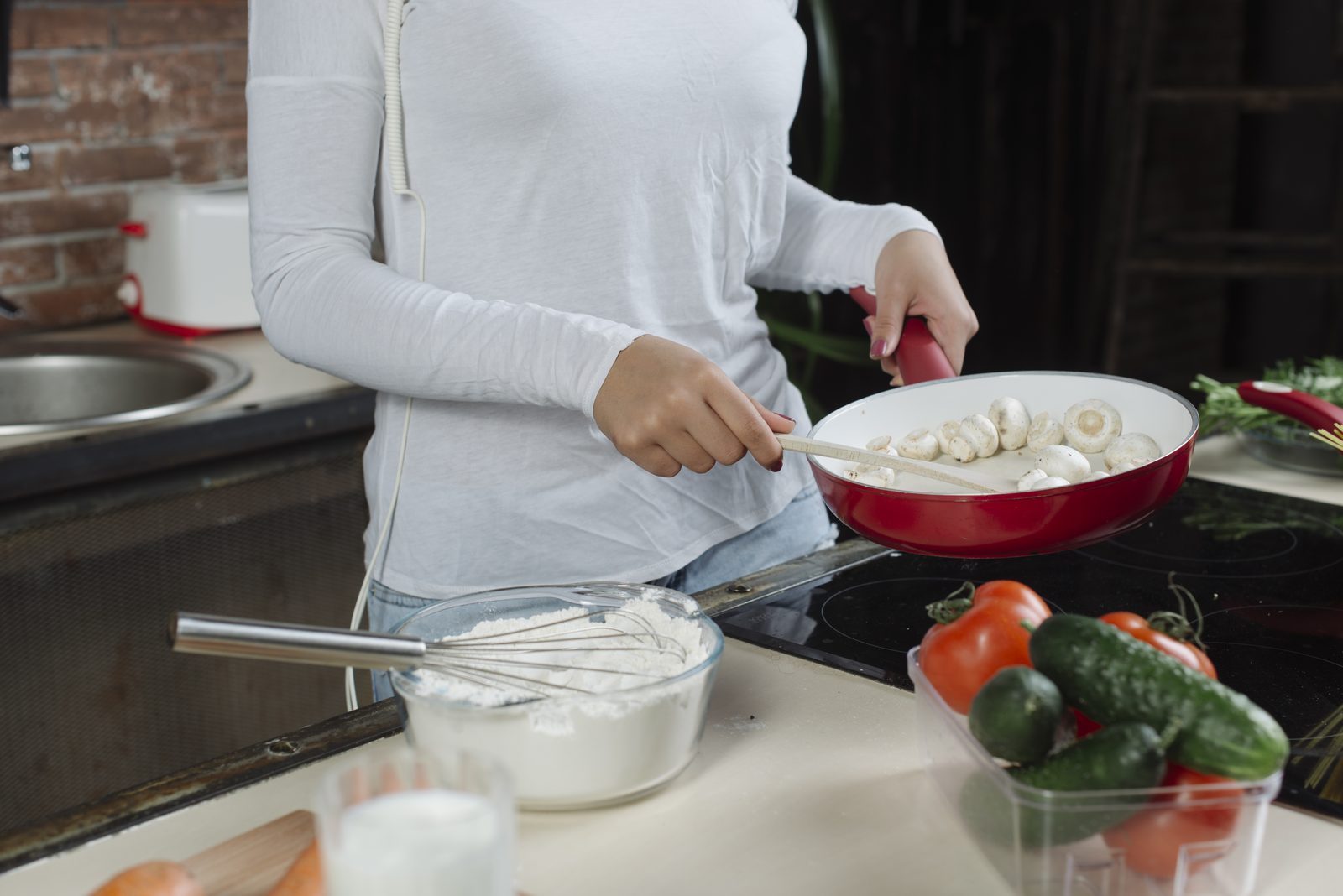
Learning to cook can feel intimidating when every recipe seems to assume you already know what you’re doing.
Most recipes assume you already know what you’re doing. They say deglaze, reduce, fold, temper, and dinner suddenly feels like a project.
Maybe you’ve burned chicken, turned rice to mush, or eaten takeout for so long that the kitchen feels like someone else’s room.
None of that means you can’t cook. Every beginner cook hits the same wall, and it’s because nobody gave you the numbers.
Chicken breast is done at 165 degrees. Thighs want 175. Rice needs less water than the package says. Eggs go on medium-low, not medium.
That’s four facts, and they fix most of what goes wrong in a beginner kitchen.
Below are 25 easy meals for beginner cooks, each teaching you one reusable thing, plus the five skills worth learning first.
The goal isn’t one good dinner. It’s making your next one easier.
What Makes a Meal Beginner-Friendly?
A good recipe for a beginner cook asks for ingredients your store already stocks and steps you can picture.
The ones worth starting with share a few traits:
- Few ingredients, none of them specialty
- One or two pans
- Forgiving timing, so a minute either way doesn’t ruin it
- Swaps allowed
- Cleanup you won’t dread
Confidence comes from repetition, not from variety. Pick four meals you actually like and cook them until you stop reading the recipe.
Then start noticing what changes when you move the heat, add salt earlier, or leave something in the pan two minutes longer.
25 Easy Meals for Beginner Cooks
1. One-Pan Chicken and Vegetables
Start here if you only try one.
Put chicken and chopped vegetables on a sheet pan, add oil, salt and pepper, and roast until done.
The part every beginner guide skips is what “done” means. Use a thermometer and pull chicken at these numbers:
| Cut | Pull it at | Why |
|---|---|---|
| Breast | 165F | Safe, and it dries out above this |
| Thigh, drumstick | 175F | Connective tissue needs more heat to soften |
| Ground chicken | 165F | Same as breast |
That thigh number surprises people. If your thighs come out rubbery, they were undercooked, not overcooked, and ten more degrees fixes them.
ThermoWorks explains why color and clear juices don’t work as doneness tests. Pink can come from pH rather than temperature, and by the time chicken feels firm it’s already dry.
A $15 instant-read thermometer removes more beginner anxiety than any recipe. If you buy one thing off this page, I’d make it that.
Skill learned: seasoning, roasting, and knowing when meat is done.
2. Spaghetti With Tomato Sauce
You boil pasta, warm sauce, combine the two, add cheese.
Don’t rinse the pasta. The starch clinging to it is what makes sauce stick instead of sliding off into a puddle.
Salt the water properly, too. It should taste like a mild broth, and it’s the only chance you get to season the pasta itself.
Bulk yours out with ground beef, sausage, mushrooms, spinach, peppers or a can of beans.
If you want the version with costs attached, these dinners under $2 a serving are priced per portion.
Skill learned: boiling pasta and finishing it in sauce.
3. Fried Rice
The most forgiving meal on this list, and the best use for leftovers you have.
One rule matters: use cold rice from the fridge. Fresh rice steams and turns to paste.
Nagi at RecipeTin Eats is firm about this in her fried rice guide, along with a second rule worth stealing. Don’t crowd the pan. Too much in there at once and it stews instead of frying.
No day-old rice? Spread fresh rice on a tray and refrigerate it for ninety minutes.
Your formula: cold rice, vegetables, egg or protein, a splash of soy. Frozen peas and carrots are fine here and always will be.
This is also the meal that makes a stocked pantry worth having, because it turns whatever’s left into dinner.
Skill learned: stir-frying and managing pan heat.
4. Chicken Quesadillas
You would struggle to overcomplicate this. Fill a tortilla with cheese and cooked chicken, fold it, and cook it in a skillet until golden.
Medium heat, not high. You want the cheese melted before the tortilla browns, and high heat gets that order backwards.
Add peppers, onions, beans, corn or last night’s vegetables. Skip the chicken and it’s still dinner.
Skill learned: skillet work, and learning what “golden” looks like.
5. Baked Potatoes With Toppings
One of the cheapest full meals there is.
Bake yours until a knife slides in with no resistance, split it, and load it up. Cheese, beans, tuna, chili, leftover chicken, yogurt instead of sour cream.
An hour at 400 degrees for a big potato. Poke it a few times first so it doesn’t burst.
Skill learned: testing for doneness by feel.
6. Simple Vegetable Stir-Fry
Less a recipe than a shape you can repeat. Get your pan hot, cook your protein first if you’re using one, add vegetables, then sauce at the end.
Sauce that works every time: soy sauce, a grated garlic clove, a spoon of honey, a splash of water.
Don’t measure precisely while you’re learning. Start small and taste as you go, because you can always add more and you can’t take salt back out.
Skill learned: cooking vegetables fast over high heat.
7. Scrambled Eggs and Toast
The cheapest thing you can learn, and the best lesson in heat control on the whole list.
Medium-low. That’s the entire secret, and it’s why most people’s eggs are rubbery.
Pinch of Yum’s soft scrambled eggs puts the whole cook at two to three minutes and tells you to take them off while they still look slightly underdone. Residual heat finishes them on the plate.
Use butter rather than oil if you have it, and your silicone spatula rather than a metal one.
Skill learned: temperature control, which transfers to everything else.
8. Chicken and Rice Bowls
Rice, protein, vegetables, sauce. Learn that shape and you’ve got thirty dinners without a recipe.
Swap the protein: chicken, eggs, beans, ground beef, a can of tuna. Swap the vegetables to whatever needs eating.
The sauce is what makes it feel intentional rather than leftover. Yogurt and lemon, soy and honey, or hot sauce mixed into mayonnaise.
Skill learned: building a balanced plate from parts.
9. Grilled Cheese and Tomato Soup
Comfort food that teaches you timing, because you have to land two things at once.
Moderate heat again. Bread browns much faster than cheese melts, so a hot pan gives you a burnt sandwich with a cold middle.
Canned soup is fine. Nobody is grading this.
Skill learned: running two pans at once.
10. Sheet-Pan Sausage and Vegetables
Slice your sausage and vegetables, oil and season them, spread them out, roast.
Spread out is the instruction people ignore. Crowd the pan and everything steams gray instead of browning.
Sausage, potatoes, onions, peppers, broccoli. Forty minutes and one pan to wash.
Skill learned: roasting several things together.
11. Tuna Pasta
Dinner in twelve minutes from things that live in the pantry.
Cook your pasta, drain it, and stir through canned tuna with olive oil, lemon and whatever herbs you have. Or make it creamy with a spoon of yogurt.
This is the meal for the night the fridge is empty. There are 33 more like it for the week before payday.
Skill learned: turning shelf-stable staples into a real meal.
12. Chicken Tacos
You don’t make any component from scratch, which is exactly why they work for beginners.
Season your chicken, cook it in a skillet, pile it into tortillas, then put the toppings on the table and let everyone build their own.
Leftover chicken works. So do beans if you’d rather skip meat entirely.
Skill learned: seasoning protein and assembling to order.
13. Omelet
Once scrambled eggs feel easy, this is the next step.
Whisk your eggs, pour them into a buttered pan on medium-low, let the bottom set, add your filling to one half, and fold.
Your first one will tear. Mine did. It tastes the same folded badly.
Skill learned: patience with eggs, and folding.
14. Simple Chicken Pasta
Sounds like a restaurant dish, takes twenty minutes.
Pasta in one pot, seasoned chicken in a pan, combine with something to bind it: tomato sauce, cream, pesto, or just garlic and good olive oil.
Save a cup of pasta water before you drain. A splash of it loosens any sauce and makes it cling. This is the single most useful trick in pasta cooking and almost nobody teaches it to beginners.
Skill learned: timing two components to finish together.
15. Homemade Pizza With Store-Bought Dough
Buy the dough. Making it from scratch is a separate hobby and it isn’t tonight’s problem.
Stretch it, sauce it, top it, bake it hot. Follow the temperature on your dough packet, and go hotter rather than cooler if you’re guessing.
Good for families because everyone builds their own and nobody complains about the toppings.
Skill learned: working with dough and reading an oven.
16. Beef and Broccoli
Your introduction to takeout food made at home for a third of the price.
Slice your beef thin against the grain. Thin slices cook in ninety seconds, which is the whole trick.
Sauce: soy, garlic, ginger, a little sugar, cornstarch mixed with water to thicken it at the end.
Skill learned: fast cooking and thickening a sauce.
17. Shakshuka
The name is the hardest part. It’s eggs poached in a spiced tomato sauce, in one pan, and it costs about two dollars to make.
Cook your onion and peppers soft, add canned tomatoes, cumin and paprika, and simmer ten minutes. Make wells in the sauce, crack your eggs in, cover, and cook until the whites set.
Serve with bread to mop it up. It works for breakfast, lunch or dinner, which is rare.
Skill learned: building flavor in layers, and gentle egg cooking.
18. Chicken Noodle Soup
The most forgiving thing here. If it tastes flat, add salt. If it’s thin, simmer longer.
Broth, chicken, carrots, celery, onion, garlic, and your noodles at the end so they don’t go slimy.
Season at the end rather than the start. Liquid reduces as it simmers and takes the salt concentration up with it.
Skill learned: simmering, and seasoning in stages.
19. Loaded Nachos
Spread your chips on a sheet pan and add cheese, beans, cooked meat, corn, peppers and jalapenos. Bake until the cheese goes.
Layer it rather than piling everything on top, or you get a cheesy crust over bare chips underneath.
Salsa and avocado after it comes out, not before.
Skill learned: layering, and oven basics.
20. Simple Salmon and Vegetables
Looks like a restaurant plate, needs no restaurant skills.
Season your salmon, put it on a sheet pan with vegetables, and roast at 400 degrees for twelve to fifteen minutes. Lemon at the end.
Fish goes from perfect to dry in about ninety seconds, so watch it rather than trusting the timer. It’s done when it flakes with light pressure from a fork.
Skill learned: cooking fish without overshooting it.
21. Homemade Mac and Cheese
If boxed is all you’ve had, the real thing is a genuine step up and it’s not hard.
Melt your butter, stir in flour, cook it a minute, whisk your milk in slowly, then add the cheese off the heat.
That’s a roux, and it’s the base of most creamy sauces you’ll ever make. Learn it here and you’ve also learned the start of soups, gravies and pot pie filling.
Two cheeses maximum on your first go. Sharp cheddar plus something that melts well is what I’d reach for.
Skill learned: a roux, which unlocks a dozen other dishes.
22. Stuffed Bell Peppers
They look like work and they aren’t.
Halve your peppers and fill them with cooked rice mixed with ground meat or beans, tomato sauce and seasoning. Top with cheese and bake until they soften.
Good use for leftover rice, and they reheat better than most things.
Skill learned: assembling and baking a composed dish.
23. Breakfast for Dinner
Eggs, toast, potatoes, sausage, pancakes, whatever fruit is going soft.
Breakfast food is cheap, fast and hard to ruin, which makes it a good Tuesday when you’ve got nothing planned.
Pancakes at seven in the evening are a completely reasonable decision.
Skill learned: juggling several simple things at once.
24. Vegetable and Bean Chili
Beans, canned tomatoes, onion, whatever vegetables you need to use up, chili powder and cumin. Then you simmer it.
Precision genuinely doesn’t matter here. Long, slow and tasted a few times along the way beats exact measurements every time.
Better the next day, and it freezes properly, so make double.
Skill learned: slow simmering and adjusting seasoning.
25. Build-Your-Own Grain Bowl
This is the one that eventually gets you off recipes entirely.
Pick your grain: rice, quinoa, couscous, bulgur. Pick your protein: chicken, eggs, beans, tuna, tofu. Add vegetables, fresh or roasted or left over. Finish with a sauce.
Combine in a bowl. That’s a recipe, and you wrote it.
Skill learned: improvising, which is the whole point.
5 Cooking Skills to Learn First
You don’t need fifty techniques. These five will carry a beginner cook a long way, and you’ll use all of them this week.
1. Heat Control
Almost every beginner problem is heat that’s too high.
Burning outside, raw inside? Turn it down. Eggs rubbery? Down. Everything sticking and smoking? Down.
Medium is where most cooking happens. High heat is for searing and boiling water, and that’s close to the whole list.
2. Seasoning
Salt matters most, and most home cooking is under-salted rather than over.
Season in layers as you go instead of all at the end, and taste whenever it’s safe to.
When something tastes flat but salty enough, it usually needs acid. A squeeze of lemon or a splash of vinegar wakes up almost any dish, and it’s the fix professional kitchens reach for first.
3. Rice and Pasta
Two staples, dozens of meals.
Rice is where most beginners go wrong, because the package tells you to use two parts water to one part rice. Love and Lemons argues for one and a half cups of water per cup of rice instead, then fifteen minutes covered and ten minutes resting off the heat.
That resting step is not optional. Skipping it is why rice comes out wet at the bottom.
Rinse it first if you want it fluffy rather than sticky.
4. Eggs
Cheap, fast, and the best practice material for heat control you can buy.
Work through scrambled, then fried, then boiled, then an omelet. A dozen eggs costs you less than a coffee and gives you six attempts.
5. Knife Safety
You don’t need speed. You need to keep your fingers.
Curl your fingertips under and let the knife rest against your knuckles. Wholefully’s guide to cutting an onion demonstrates the grip, and makes the point that a large chef’s knife is safer than a small paring knife because it cuts in one stroke instead of sawing.
Cut a flat side onto anything round before you slice it. Round things roll, and rolling is how people get cut.
And keep the knife sharp. Savory Simple puts it as the sharper the knife, the less you cry, which is true twice over: a dull blade crushes onion cells and releases more of what stings, and it slips.
Go slowly. Speed arrives on its own and chasing it early is how you end up in urgent care.
Beginner Cooking Mistakes Worth Avoiding
Too much heat. Worth repeating, because it ruins more beginner cooking than everything else here combined.
Crowding the pan. Food needs space to brown. Pack it in and it steams, and steamed chicken is gray and sad. Cook in two batches.
Changing the recipe on the first attempt. Make it as written once so you know what it’s supposed to be. Then start moving things.
Not reading it through first. Recipes hide instructions in the middle. Marinate for two hours is a miserable thing to discover at six o’clock.
Cooking three things at once. Make one dish well. Sides come later.
Never tasting. If it tastes like nothing, it needs salt or acid, and you’ll only find that out by tasting it.
How to Cook on a Beginner Budget
Cooking at home saves you money, but only if you use what you buy. This is where most beginner cooks lose the savings.
Build around staples that appear in multiple meals rather than buying a specialty jar for one recipe:
Rice, pasta, potatoes, eggs, dried or canned beans, lentils, canned tomatoes, frozen vegetables, onions, garlic, oats, flour, and a handful of spices.
Frozen vegetables deserve a particular mention. You use what you need, the rest keeps, and nothing wilts at the back of a drawer while you feel guilty about it.
Cooking is usually the biggest single line you can move, which is why it sits near the top of our 35 frugal living tips rather than buried among the small stuff.
For the fuller version of this, our 20 changes that lower a grocery bill are sorted by payback, and these $5 dinners for four show what the staples above actually turn into.
If money is the reason you’re learning to cook, it’s worth knowing what your food actually costs per meal. Our 50 costed family dinners put a number against each one.
A 7-Day Beginner Meal Plan
Don’t attempt seven new things in your first week. Pick meals that share ingredients, so one chicken and one bag of rice cover most of it.
| Day | Dinner | What it teaches |
|---|---|---|
| Monday | Spaghetti with tomato sauce | Pasta and sauce |
| Tuesday | Chicken and rice bowls | Cooking rice, building a bowl |
| Wednesday | Fried rice | Using leftovers, pan heat |
| Thursday | Chicken quesadillas | Skillet browning |
| Friday | Pizza with bought dough | Oven timing |
| Saturday | Loaded baked potatoes | Testing doneness |
| Sunday | Chicken noodle soup | Simmering and seasoning |
Notice what’s happening. Chicken shows up four times, rice twice, and Wednesday is built from Tuesday’s leftovers.
That’s less shopping, less waste, and fewer decisions. If you want the planning side done properly, our 15-minute weekly meal plan covers it, and this $50 week for a family of four is the costed version.
Four Weeks to Cooking Without a Recipe
Week 1. Eggs, rice, pasta, salt. Nothing else. Cook eggs four different ways and get rice right twice.
Week 2. Chicken and vegetables. Learn the thermometer. Roast, then pan-fry the same thing and notice the difference.
Week 3. Sauces, soups, stir-fries. Make a roux. Make a pan sauce. Taste constantly.
Week 4. Cook one dinner without opening a recipe.
Four weeks in, you’ll know more than 25 recipes. You’ll know what heat does, what salt does, and what a pan sounds like when it’s ready.
That last part is what separates a beginner cook from someone who just follows instructions well.
You Don’t Have to Cook Like a Restaurant
The fastest way to quit is comparing your plate to a photograph that took a stylist four hours.
Presentation is irrelevant. So are expensive ingredients, specialist equipment, and making things from scratch that you can reasonably buy.
Food that tastes good and fits your week is the entire goal.
Cook the same four meals until they’re boring. Change one thing. Cook them again. The question quietly shifts from what recipe should I make to what can I make with what’s here, and that’s the whole transition.
On the nights it doesn’t happen at all, keeping 30 twenty-minute dinners on hand beats ordering, and it beats feeling bad about ordering.
Frequently Asked Questions About Cooking for Beginners
What is the easiest meal for a beginner cook?
Scrambled eggs and toast, or pasta with tomato sauce. Both use two or three ingredients, one pan, and teach you something you’ll use in everything else.
What should a beginner cook first?
Something you already like eating. Motivation matters more than technique at the start, and you’ll repeat a meal you enjoy.
What temperature should chicken be cooked to?
165 degrees for breast and ground chicken. Dark meat like thighs and drumsticks is better at 175, because the connective tissue needs the extra heat to soften. Rubbery thigh meat is undercooked, not overcooked.
Why does my rice always come out mushy?
Usually too much water. Try one and a half cups of water per cup of white rice instead of two, and let it rest covered for ten minutes off the heat before you touch it.
Why are my scrambled eggs rubbery?
The heat is too high. Medium-low, two to three minutes, and take them off while they still look slightly wet. They keep cooking on the plate.
What equipment does a beginner actually need?
A frying pan, a saucepan, a sheet pan, a cutting board, one decent chef’s knife, a spatula and a wooden spoon. Add an instant-read thermometer and you’ve covered nearly everything here.
How do I stop wasting food while I’m learning?
Plan a few meals that share ingredients, shop to that list, and cook the things that spoil first. Frozen and canned ingredients buy you time when a week goes sideways.
Is cooking at home actually cheaper than takeout?
Usually, and by a wide margin on staple meals. It depends on what you buy and how much gets thrown away, which is why sharing ingredients across meals matters more than finding cheap recipes.
How long before cooking stops feeling like work?
Around a month of cooking most nights, for most people. The turn comes when you stop measuring everything and start tasting instead.
Final Thoughts
No beginner cook gets there by reading. You cook one dinner, then another, and your tenth is easier than your first.
Your first omelet will look wrong. Your first fried rice may be too salty. Your chicken will take longer than the recipe promised, because your oven isn’t the one the recipe was tested in.
All of that is the process working.
Start with three of these easy meals for beginner cooks, learn the technique underneath each one, and let the rest come. Buy the thermometer. Turn your heat down.
You don’t need to cook like a chef. You need to be comfortable feeding yourself, and that starts with one easy dinner tonight.